Can one robot cell handle multiple component types?
Yes. Modular tooling baseplates and saved robot programs can allow operators to swap fixtures and change weld jobs quickly when the part family is planned correctly.
Kavin Inc designs and supports robotic welding cells for repeat fabrication, ABB welding robots, fixtures, programming, weld proving, commissioning, and lifecycle support across Coimbatore, Tamil Nadu, and India.
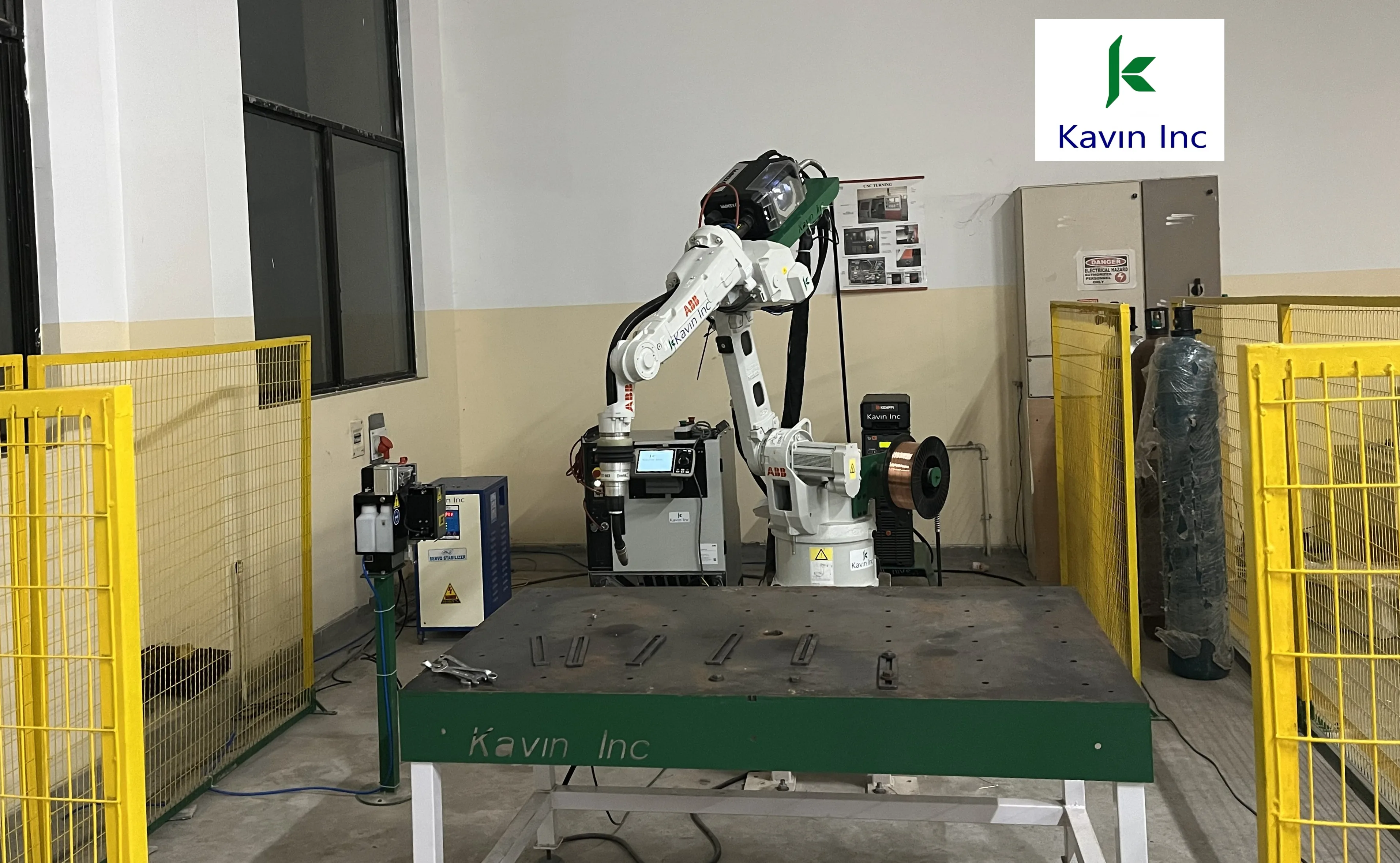
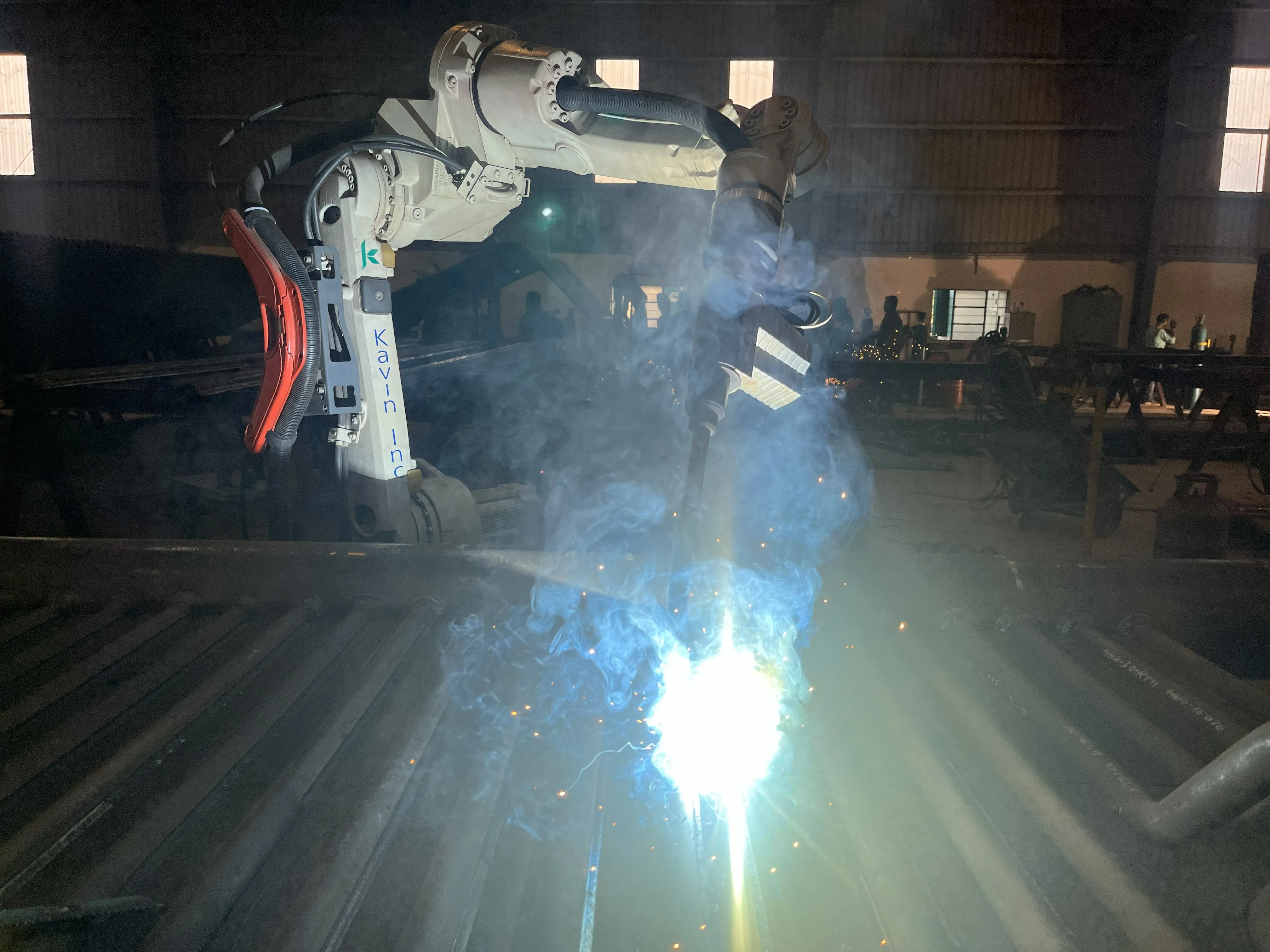
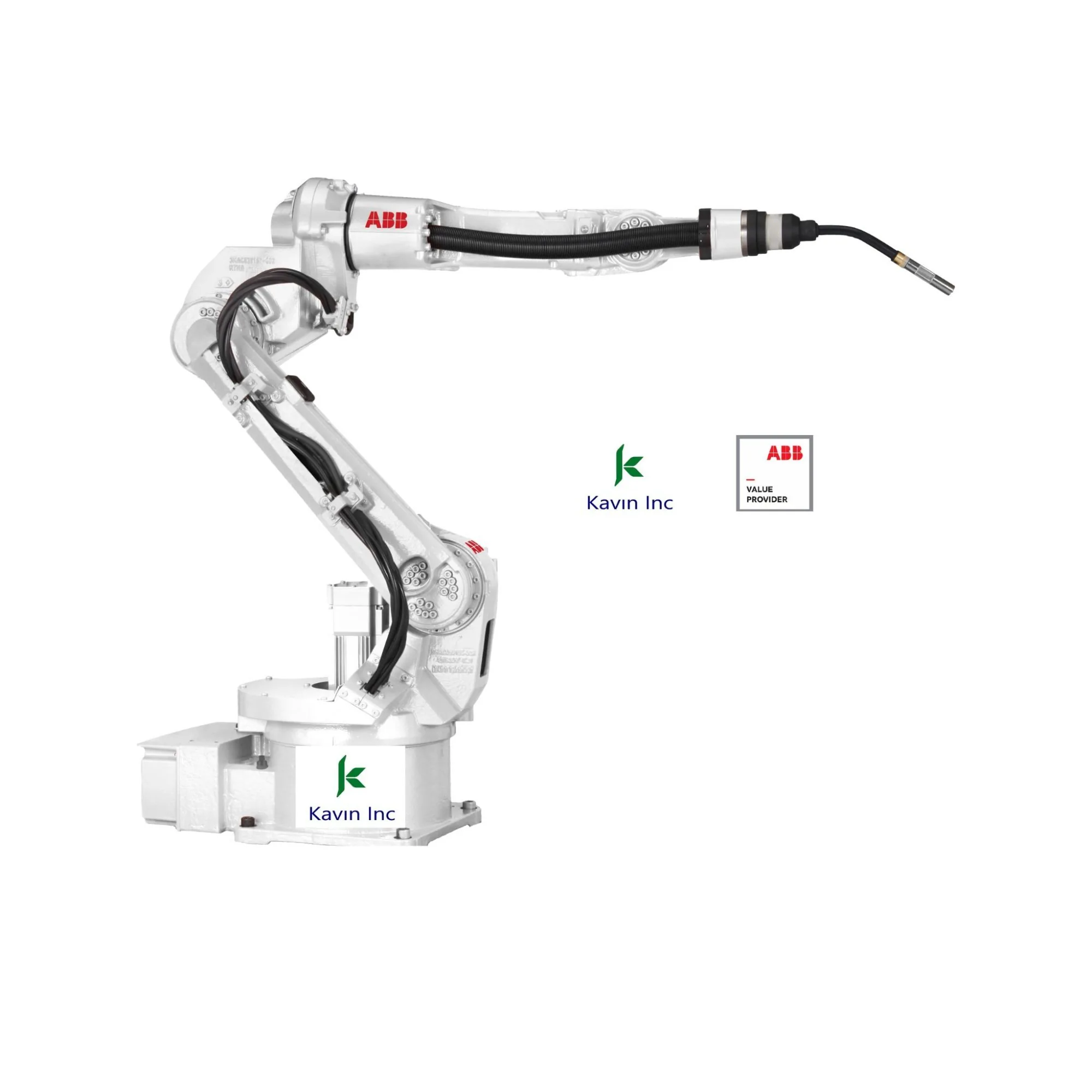
Manual welding bottlenecks, inconsistent weld quality, and operator shortages can stall production schedules. Kavin Inc engineers turnkey robotic welding cells around component geometry, cycle time targets, fixture access, and shop-floor footprint. The integration scope can include base frames, torch cleaning, safety fencing, power source synchronization, robotic weld programming, and commissioning support.
Designed for high-precision arc welding tasks with optimized performance and energy routing.
Hose package and welding media (power, shielding gas, wire, air) routed inside arm for enhanced durability and reduced maintenance.
1.5 to 3 meters work envelope.
Can be floor-mounted or inverted for versatile cell layouts.
TrueMove and QuickMove motion control technologies for accurate path and rapid movement.
Intuitive ABB FlexPendant interface with touchscreen and joystick for faster setup.
Compatible with RobotStudio for simulation and offline programming.
These cells are suited for heavy structural fabrication, automotive chassis frames, exhaust assemblies, pressure-vessel subassemblies, tubular furniture, sheet-metal brackets, machine frames, and repeat fabricated parts where stable torch angle and repeatable fixturing matter.
Yes. Modular tooling baseplates and saved robot programs can allow operators to swap fixtures and change weld jobs quickly when the part family is planned correctly.
Results depend on part volume, current rework, manpower availability, and arc-on time. Many fabricators justify automation through higher duty cycle, repeat quality, and reduced rework.
A robot mounted on a linear track can cover long structures, multiple fixtures, or large fabrication jobs without forcing the part into a cramped cell layout. Rotary positioning keeps the weld joint at a better angle for consistent access.