WAAM Wire Arc Additive Manufacturing for Indian Fabrication
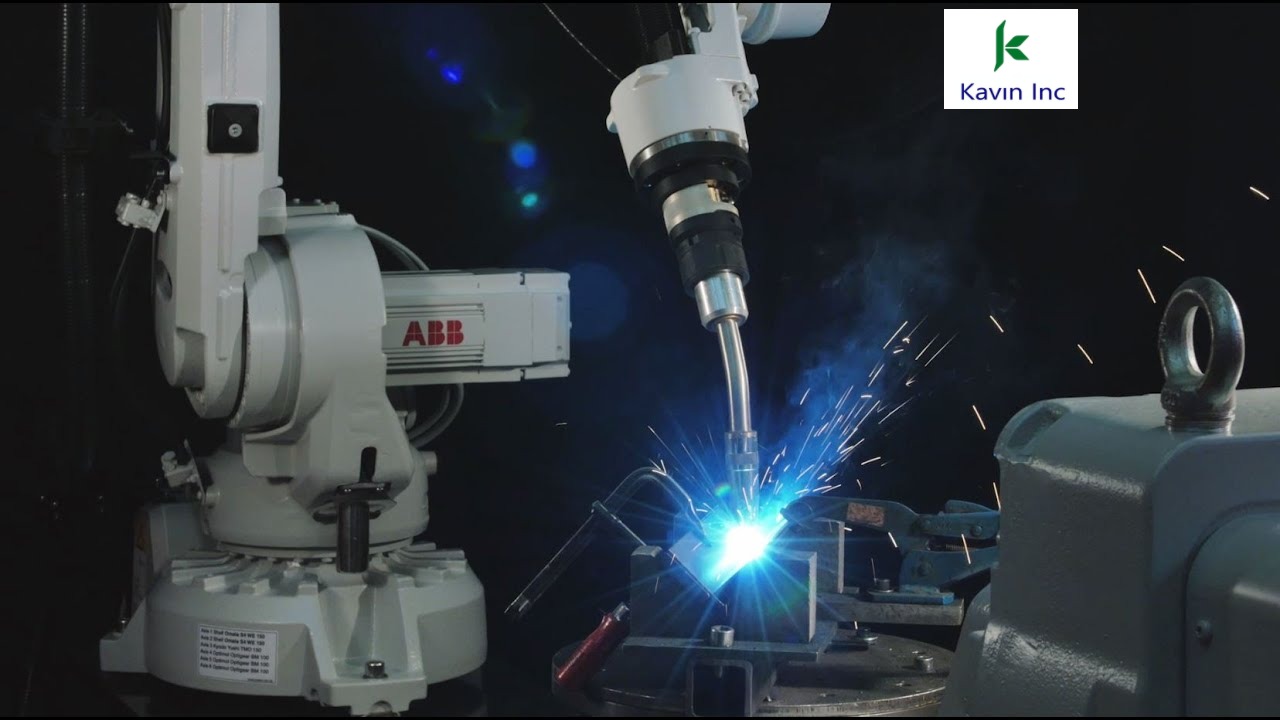
Wire Arc Additive Manufacturing (WAAM) is quickly transitioning from aerospace research institutes into forward-looking Indian fabrication shops. By combining a 6-axis industrial articulated robot with an advanced waveform-controlled MIG/CMT power source, fabricators can produce near-net-shape metal preforms at deposition rates up to 10x faster than powder-bed 3D printing.
How WAAM Works on a Robotic Arm
Unlike conventional subtractive machining where 70% to 90% of a massive forged billet is machined away into scrap chips (Buy-to-Fly ratio > 8:1), WAAM deposits material layer-by-layer only where structural integrity is required.
A standard 6-axis robot, such as an ABB IRB 2600ID or Fanuc Arc Mate 120iD, executes continuous CAD-sliced slicing paths. The welding power source runs cold arc transfer modes (such as CMT or Pulse Multi-Control) to deposit 3 to 8 kilograms of weld bead per hour while preventing destructive heat distortion.
Process Comparison: WAAM vs. Conventional Metal 3D Printing
| Parameter | WAAM (Wire Arc) | LPBF (Laser Powder Bed) | Heavy Forging & Machining |
|---|---|---|---|
| Deposition Rate | 3.0 – 8.0 kg / hour | 0.1 – 0.4 kg / hour | Subtractive (chips) |
| Build Envelope | Several meters (robot reach + track) | Confined chamber (< 500 mm³) | Limited by forge press & mill |
| Feedstock Cost | Commercial wire (Economical) | Specialized powder (Expensive) | Billet stock |
| Surface Finish | Near-net shape (requires post-machining) | High fidelity as-built | High precision machined |
| Lead Time | 2 – 5 days | 1 – 2 weeks | 8 – 16 weeks (forging dies) |
Critical Engineering Considerations
1. Interpass Temperature & Heat Management
Heat accumulation is the primary challenge in WAAM. As layer count exceeds 20, the substrate thermal sink diminishes. Without programmed cooling pauses or active shielding gas cooling, the liquid weld puddle will slump, causing dimensional sag and coarse grain structures. Kavin Inc integrates pyrometer feedback loops directly into the robot RAPID software to regulate interpass temperatures below 180°C.
2. Path Planning & Oscillation Strategy
Overlapping parallel beads requires calibrated step-over distance (typically 65% to 72% of single bead width) to avoid interlayer valley porosity. Alternating start and stop points on successive layers prevents asymmetric thermal stress accumulation.
High-Value Applications in Indian Industry
- Valve Bodies & Flanges: Building corrosion-resistant Inconel or duplex stainless steel sealing faces onto low-carbon steel bodies (dual-metal WAAM).
- Heavy Equipment Repair: Restoring worn excavator teeth, turbine runners, and forging dies rather than scrapping entire assemblies.
- Rapid Tooling: Depositing prototype stamping dies and thermoforming mold preforms within 72 hours.
Key Technical Takeaways
- Near-Net Preforms Save Months: Eliminate 12-week forging delivery delays by depositing custom blanks in days.
- Low Feedstock Cost: Leverages standard welding wire available from local suppliers.
- Cold Arc Modes Are Essential: CMT or low-spatter pulse power sources prevent layer sag and maintain metallurgical density.

Discussion